Land Acknowledgement
Acknowledgment is a simple first step towards resisting the erasure of Indigenous histories. As a non-profit organization, we seek to build mindfulness of our present participation in ongoing colonialism. The more we know of each other’s stories, the more we will understand and learn. In sharing this acknowledgement with our community and visitors, we hope to offer an opportunity to reflect on our region’s history and provide a point of access for those who wish to support or get involved with local Indigenous groups.
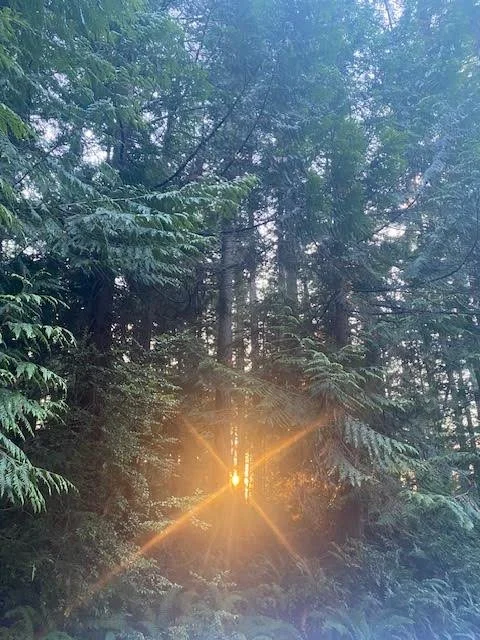
If we were able to look back in time and see…
While the northern portion of Whidbey Island was home to the Skagit tribe, land from above the head of Holmes Harbor to the southern tip of the island was Snohomish tribal territory.
Three permanent Snohomish villages were located on South Whidbey:
D’GWAD’wk or Digwadsh (‘in the basket’ or ‘lots of a certain species of crabs’), was the largest and most important of the three. Surrounded by a cedar palisade, the village had six or seven longhouses, two cemeteries, and a potlatch house visited on occasion by people from the Duwamish and Suquamish tribes. It was abandoned about 1870 when the residents were relocated to Tulalip.
TSEHT-skluhks (‘ragged nose’) was located at Sandy Point, east of downtown Langley. This village had a potlatch house and clam beds, which drew visitors from as far away as the Samish. Captain George Vancouver noted in his journals that Captain Whidbey (the island’s namesake), saw two hundred people at this location when they first visited in 1792.
SHET’LH-shet-lhuts (‘burnt leaves’), on the west side of South Whidbey Island, at Bush Point in the Freeland area, had three longhouses, a potlatch house, and a cemetery.
Across Saratoga Passage on Camano Island was WHESH-ud(splashing water), another Snohomish village location. Residents atTSEHT-skluhks told of witnessing the earthquake and great slide of 1825 when the southern tip of Camano Island slid into Possession Sound. After this, WHESH-ud was used mainly for seasonal clamming.
Thanks to the Langley Chamber of Commerce for the above information
Indigenous Groups Whose Land We Occupy:
Snoqualmie Tribes – https://snoqualmietribe.us/
Stillaguamish Tribes – https://www.stillaguamish.com/
Tulalip Tribes – https://www.tulaliptribes-nsn.gov/
Snohomish Tribes – https://snohomishtribe.org/
Find the tribal land that you inhabit at www.native-land.ca or www.washingtontribes.org.
To learn more, take action, or donate, these are just some of the organizations doing important work that you can support:
• Washington State Tribal Directory – https://goia.wa.gov/tribal-directory
• United Indians of All Tribes Foundation – https://www.unitedindians.org/
• Hibulb Cultural Center – https://www.hibulbculturalcenter.org/
• Red Eagle Soaring Native Youth Theatre – https://www.redeaglesoaring.org/
• Potlatch Fund – https://www.potlatchfund.org/
• Real Rent Duwamish – https://www.realrentduwamish.org/